
If you wish to contact a representative to resolve any questions or start your evaluation process, fill out the form to your right.

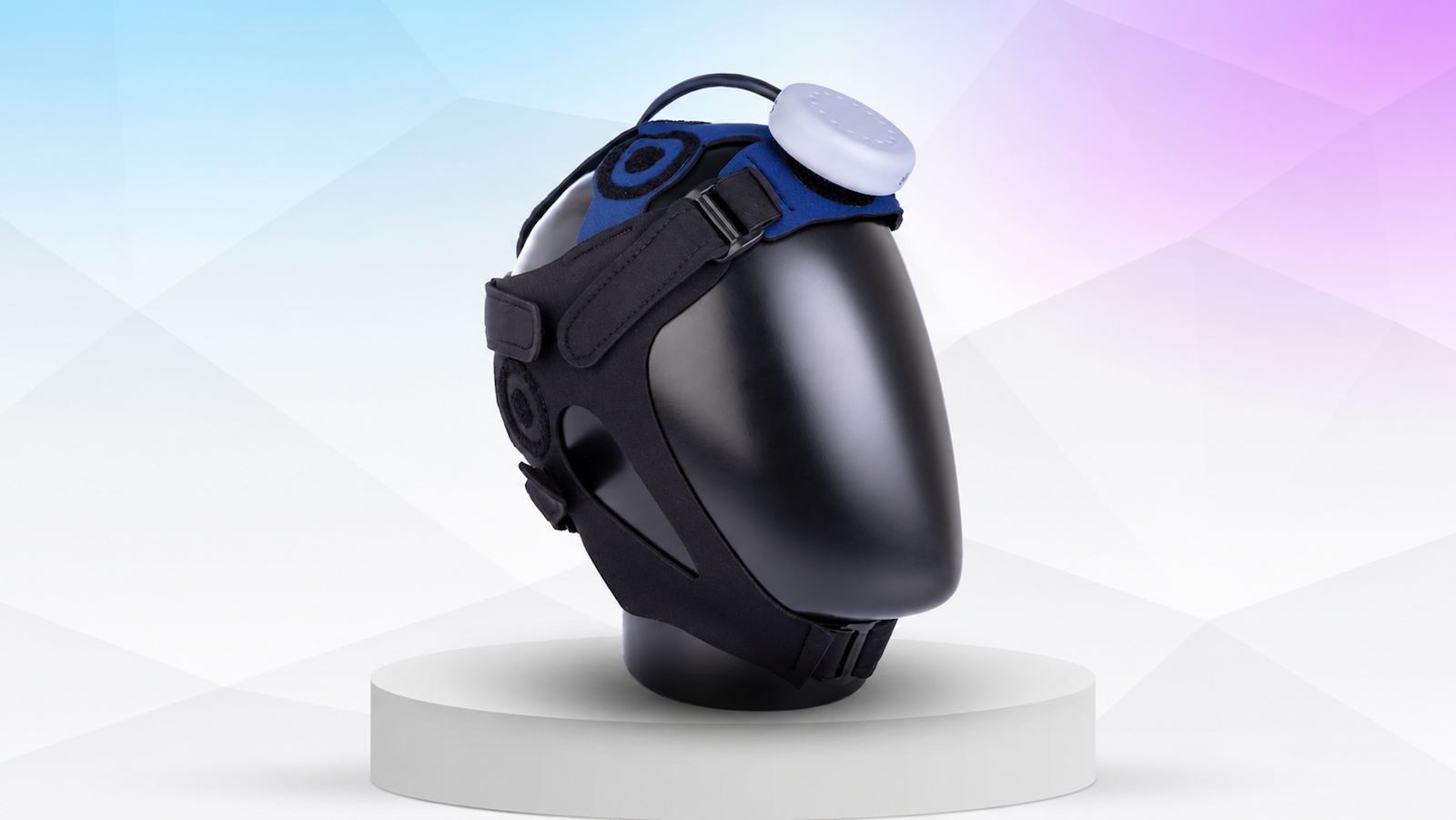
Transcranial magnetic stimulation (TMS) is a non-invasive brain stimulation treatment that uses magnetic pulses to modulate activity in specific areas of the brain.
Originally developed to treat depression, TMS has gained recognition in regenerative and functional medicine for its ability to promote neuroplasticity, improve mood, enhance cognitive performance, and reduce symptoms related to chronic pain and neurological dysfunction.
TMS requires no medication or surgery and is administered while the patient is awake and alert.
– Treatment-resistant depression and anxiety
– Post-traumatic stress disorder (PTSD)
– Chronic fatigue or brain fog
– Migraines and chronic headaches
– Sleep disorders
– Neurological conditions (e.g. Parkinson’s, stroke recovery – use of support)
– Attention and concentration problems
– Chronic pain syndromes (for example, fibromyalgia)
– Post-COVID neurological symptoms

I'd heard people talk about stem cells and how it would help them, I've had knee surgery in my right knee and chronic knee pain for years, I’m trying to get that better and I thought I'd give stem cells a try… I just recently did a hike 1048 steps up a mountain and was able to turn around and run down with zero knee pain.

I came here for treatment for type two diabetes, you guys have just taken all the Time in the World to really be patient with me, explaining everything in detail, every question, every concern... I think if I had to use a word uh for all this that it would have to be integrity, every one here is just full of integrity, it’s the way I think people should be treated.

I sustained a really major injury to my finger, it just was a freak accident… I did some research on alternative treatments and you proved to be the best option. I had an incredible experience, you guys were very honest with me. You told me what to expect… it’s been an incredible experience, first of all the staff here are exceptional, I’m not exaggerating, no jokes, really personable, I've never experienced this level of genuine care from any other medical crew, that's cool, 10 out of 10 points to you guys

I found you on the internet and I called, I also I reached out to many other clinics as well but your service from the onset was amazing and very thorough and I found the information that I needed to make my decision on coming to Mexico from Canada, which I think is pretty significant, but the service and just the attention that you gave to me was amazing so I'm thankful for that.

We were very well taken care of, very professional warm and welcoming environment.. three treatments a day is not fun, it’s difficult and it's time consuming, but it was made entirely pleasant and easygoing.. I already see positive changes with Lisa's mobility in the what five days five treatments we've had.

Yo estoy diagnosticada con endometriosis, que he estado tratando con terapia de ozono, también me diagnosticaron con varios miomas. Me hice estudios previos a ponerme células madre, había siete miomas de 4 cm. Después de dos tratamientos de células, 1 cada 6 meses, volvi a hacerme el estudio anual, salió que mis miomas se redujeron, el más grande está en 2 cm y los demás, la verdad, son tan pequeños que ya el doctor me dijo que podía estar tranquila.
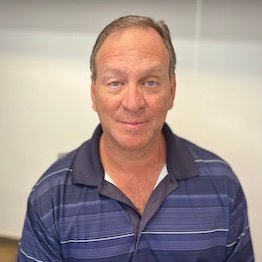
I initially came to the clinic because I had a rotator cuff injury, and I wasn't sure what actually was injured. I had an MRI done here. I had several partial tears as well as a bunch of other items that I can't pronounce.The clinic was great. They explained everything to me. I started with the IV ozone, basically by the first treatment, all the pain went away completely.I ended up coming in for the stem cell treatment the following week, it was a very quick procedure. In about 2 months, I was able to swing a golf club.I've been coming back for the IV ozone ever since.
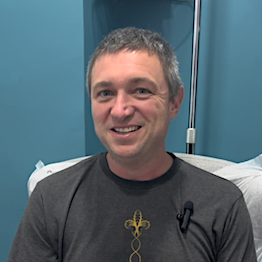
Testimonial from a Medisync patient who came to us with chronic knee pain and one clear goal: getting back to doing what he loves—skating.John, he shares his journey from limited mobility and discomfort to recovery and renewed freedom, thanks to a personalized regenerative medicine protocol. His story is a powerful reminder that with the right care, recovery is possible.
TMS works by delivering short, selective magnetic pulses to the surface of the brain, typically the prefrontal cortex or motor cortex. These pulses stimulate neurons and influence the activity of brain circuits, helping to:
Over time, TMS can help “retrain” the brain to function more efficiently, resulting in long-lasting improvements in mood, cognition, and physical symptoms.
– A thorough consultation will be performed to determine if TMS is right for you.
– A brain mapping evaluation may be performed to identify the precise areas for stimulation.
– You will not need to fast or alter medication unless instructed to do so.
– Repetitive TMS (rTMS).
Our medical team will recommend the best protocol for your goals.
– You will sit comfortably in a chair with a magnetic coil placed close to your scalp.
– The machine emits short pulses for 20-40 minutes.
– You may feel tapping or hearing clicking sounds, but the treatment is not painful.
– You do not need sedation or recovery time: you will remain awake and can resume your daily activities immediately.
– Some patients immediately feel mental clarity or mood changes.
– Others may need several sessions before noticing significant effects.
– A slight headache or scalp sensitivity may occur, which usually disappear quickly.
– You can return to work or drive after your appointment.
At Medisync, all TMS treatments are supervised by licensed physicians with training in neuromodulation. Treatments are performed with FDA-cleared TMS devices in a safe and comfortable outpatient setting.
Our team works closely with you to monitor progress, make adjustments, and integrate TMS into a broader regeneration or mental wellness plan if necessary.
Yes. Transcranial Magnetic Stimulation is FDA-cleared, non-invasive, and considered very safe. It does not require anesthesia or medication. Serious side effects are rare.
No. Most patients describe the sensation as tapping or pulsing on the scalp. The intensity can be adjusted for greater comfort.
Yes. TMS is usually part of a broader integrative plan and may be combined with:
No. Although best known for treating depression, TMS is also effective for anxiety, cognitive impairment, chronic pain, and neurological recovery.
Not necessarily. We offer both medical and wellness-based uses of Transcranial Magnetic Stimulation. Our team will evaluate your needs and goals to determine your eligibility.
If you struggle with fatigue, mood, or concentration, or are looking for a non-invasive, drug-free therapy to improve brain health, TMS can be a transformative tool. Fill out this short questionnaire to book your consultation and let our medical team design a personalized Regenerative Medicine plan for you.
If you wish to contact a representative to resolve any questions or start your evaluation process, fill out the form to your right.